Calm discipline at home gives children structure without making fear the center of family life. Discipline works best when it teaches what to do next. Punishment often focuses only on making discomfort memorable. Children may comply temporarily while missing the lesson entirely. A calmer approach connects boundaries with responsibility, repair, and practice. Parents can use co regulation skills before expecting reflection. An overwhelmed child cannot absorb a thoughtful explanation. Safety and regulation come first. Teaching follows when the nervous system becomes available again. This sequence protects authority while helping children develop the skills behind better choices.
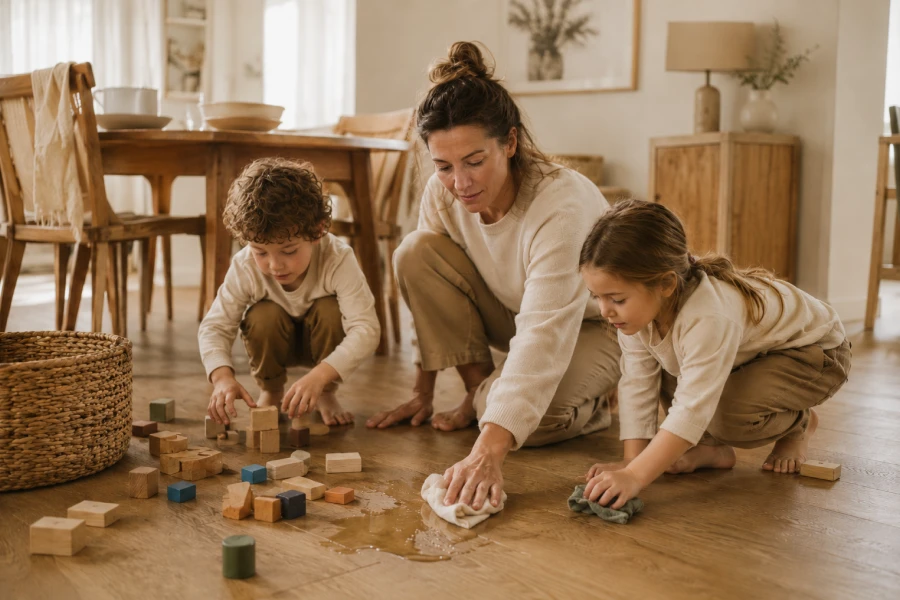
Discipline originally centers on learning, not suffering. Children need repeated instruction because self-control develops gradually. A consequence should help them understand the impact of the behavior. Cleaning a spill teaches more than unrelated screen loss. Repairing a hurt relationship builds responsibility. Parents can ask what needs to happen now. This keeps the response connected to the problem. Shame may stop behavior briefly, but it rarely teaches a replacement skill. Teaching requires patience because progress comes through repetition. The child learns that mistakes have consequences, yet those consequences can lead toward competence and repair.
Calm boundaries are specific, predictable, and enforceable. Vague warnings create confusion and invite repeated testing. Parents should state what they will do, not only what the child must stop. They might move an unsafe object or pause an activity. This turns the boundary into action. A collection of family conflict repair ideas can support the conversation afterward. The adult should avoid adding threats that cannot be maintained. Consistent follow-through makes fewer words necessary over time. Children learn that calm delivery does not mean the limit is optional. Clarity becomes stronger than volume.
Logical consequences connect directly to the behavior. A toy used unsafely may need a temporary pause. A mess created during anger still needs cleanup. Hurtful words may require repair before play resumes. The consequence should remain proportionate to the child’s age and capacity. Long punishments often lose their teaching connection. Parents should also avoid consequences designed mainly to cause distress. The goal is responsibility, not revenge. A useful consequence answers what needs to be repaired, practiced, or protected. Children understand limits more clearly when the outcome makes sense within the situation.
Repeated behavior can make parents feel that nothing is working. Children often need many repetitions before a skill becomes reliable. The adult should look for patterns around timing, hunger, transitions, or attention. Prevention may solve more than stronger consequences. A child who hits during crowded play may need earlier support. One who refuses every morning may need fewer decisions. Parent emotional awareness also matters when repetition triggers frustration. Parents can separate slow learning from deliberate disrespect. Consistency remains important, but the response may need adjustment. Repetition invites investigation as well as follow-through.
Children can experience consequences without being mocked, labeled, or exposed. Humiliation may create compliance, but it damages trust. Parents should correct privately whenever possible. The language should focus on the behavior rather than the child’s character. A firm statement can still sound respectful. Adults can acknowledge disappointment without withdrawing affection. The child should know the relationship remains intact. This security makes accountability easier to tolerate. Respectful discipline also models how power should be used. Children learn that strength can protect dignity instead of diminishing it.
Consistency improves when caregivers agree on a few core expectations. Too many rules create confusion for everyone. Families can identify the boundaries that protect safety, respect, and essential routines. Adults should discuss likely responses before conflict occurs. This reduces improvisation during stressful moments. Visual reminders may help younger children understand expectations. Parents can also review whether a rule still fits the child’s age. Consistency does not mean refusing all flexibility. It means the child can predict the family’s basic values and responses. That predictability creates security while helping discipline become calmer, clearer, and more effective.




Leave a comment