
Peaceful bedtime habits can turn an overstimulating evening into a softer family transition. The goal extends beyond getting children into bed on time. A calm ending helps everyone process the day and prepare emotionally for tomorrow. Children respond to repeated sensory cues, familiar language, and steady pacing. Parents also gain relief from last-minute chaos. A supportive evening wind-down routine creates space for connection without adding complexity. The strongest rituals are often simple and easy to repeat. They make the home feel quieter before sleep arrives. Over time, those small moments become part of family memory. Rest begins to feel like a shared experience rather than a nightly struggle.
Nighttime tension often starts long before pajamas appear. Loud play, bright screens, and rushed cleanup can keep the body activated. Families can begin slowing the evening thirty minutes earlier. Softer lighting sends a natural cue that activity is ending. Quieter voices also change the emotional atmosphere. Preparing school items earlier prevents sudden tasks near bedtime. A clear sleep preparation routine reduces those avoidable surprises. Children settle more easily when the entire house reflects the transition. Parents feel less pressure because fewer responsibilities remain. The bedroom then becomes the final step in a process that has already begun.
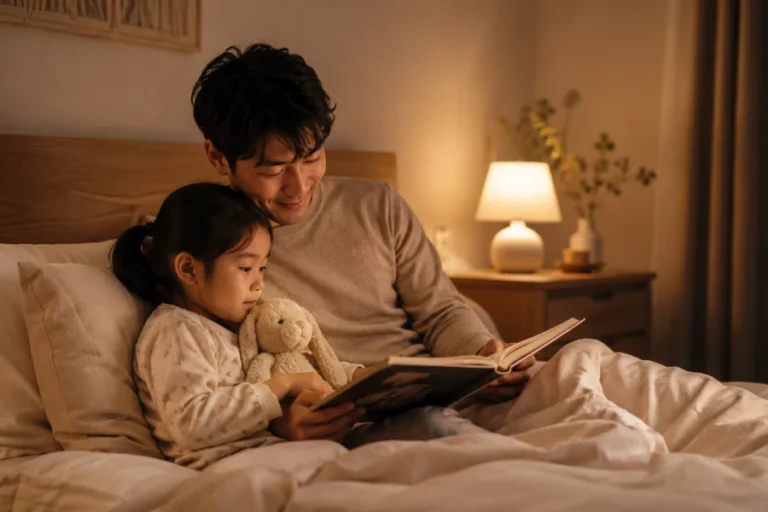
Children notice the environment before they understand the schedule. Warm light, familiar scents, and soft textures can signal safety. A consistent sound may also support relaxation. Some families use quiet music, while others prefer silence. The important element is predictability rather than any single sensory choice. Parents should avoid adding too many stimulating features. One or two cues are usually enough. A simple calming bedtime ritual becomes powerful through repetition. Eventually, the child begins to relax as soon as those cues appear. The body learns the sequence even before the mind fully recognizes it.
Families sometimes focus so heavily on the clock that connection disappears. A child may be in bed on time yet still feel emotionally unsettled. Five attentive minutes can matter more than fifteen rushed ones. Parents can ask one gentle question about the day. They can also share one thing they appreciated about the child. This creates warmth without inviting a long conversation. Eye contact and undivided attention help the moment feel complete. Phones should remain outside the interaction whenever possible. The child receives a clear message of importance. That emotional security often supports sleep more effectively than strict timing alone.
Young children need more visual structure and physical support. Older children often value privacy and a sense of choice. The ritual should evolve as independence grows. A preschooler may enjoy arranging stuffed animals before sleep. A school-age child might prefer reading alone after a brief check-in. Preteens may respond better to a quiet household expectation than a detailed sequence. Parents can preserve the emotional purpose while changing the form. A flexible healthy sleep routine supports those developmental shifts. Children feel respected because the process grows with them. Consistency remains present without making the ritual feel childish or controlling.
Rushing creates tension even when every task gets completed. Parents can protect the evening by moving decisions earlier. Clothes, lunches, and school materials can be prepared before the final hour. Bathing does not need to happen every night at the same time. Families can separate essential tasks from optional ones. This prevents a crowded routine from becoming fragile. A shorter evening can still feel meaningful. Children benefit from calm attention more than an overloaded schedule. Parents also preserve energy for the moments that require patience. The result is an ending that feels spacious, even when the family has limited time.
Consistency should create reassurance, not anxiety. Families need permission to adapt when life changes. A late event may require a shortened version of the usual sequence. Travel may replace familiar objects with familiar words. The emotional pattern can remain stable even when the setting changes. Parents can identify the two rituals that matter most. Those become the portable core of the evening. Children then learn that safety comes from connection and rhythm, not perfect conditions. This flexibility protects the habit from collapsing during busy seasons. A routine becomes truly reliable when it can bend without losing its purpose.


Leave a comment